01
ASTM A194
2H · 4 · 7 · 7L · 8 · 8M
Nuts for industrial service where the assembly specification calls for an ASTM designation.
Supply and manufacturing for industrial applications
Complementary fastening elements
Fastening elements selected according to the bolt, the bearing surface and the installation demands of each joint.
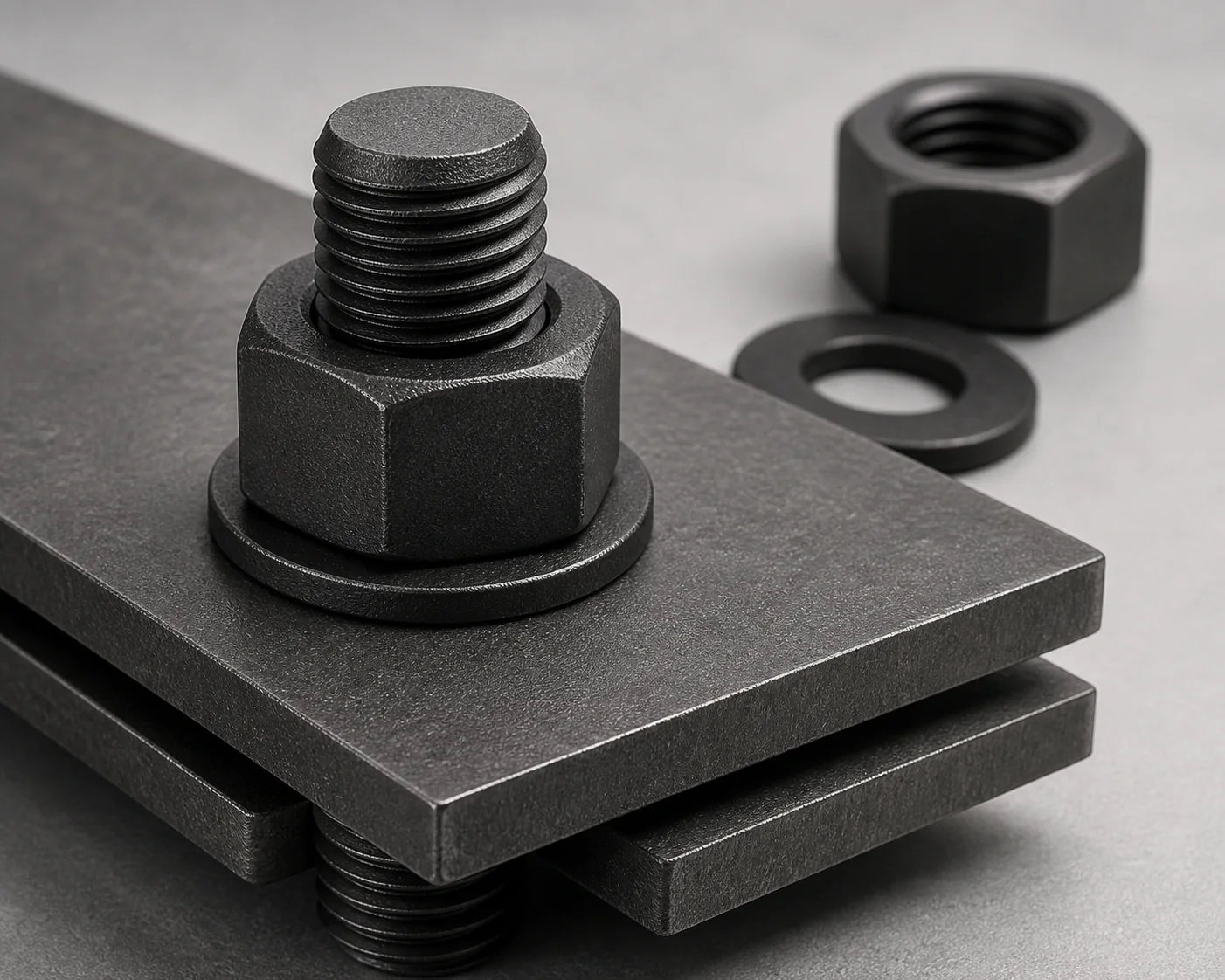
Selected as an assembly
Standard · size · installation
Nuts
The nut must be compatible with the standard, grade and dimensional system of the bolt.
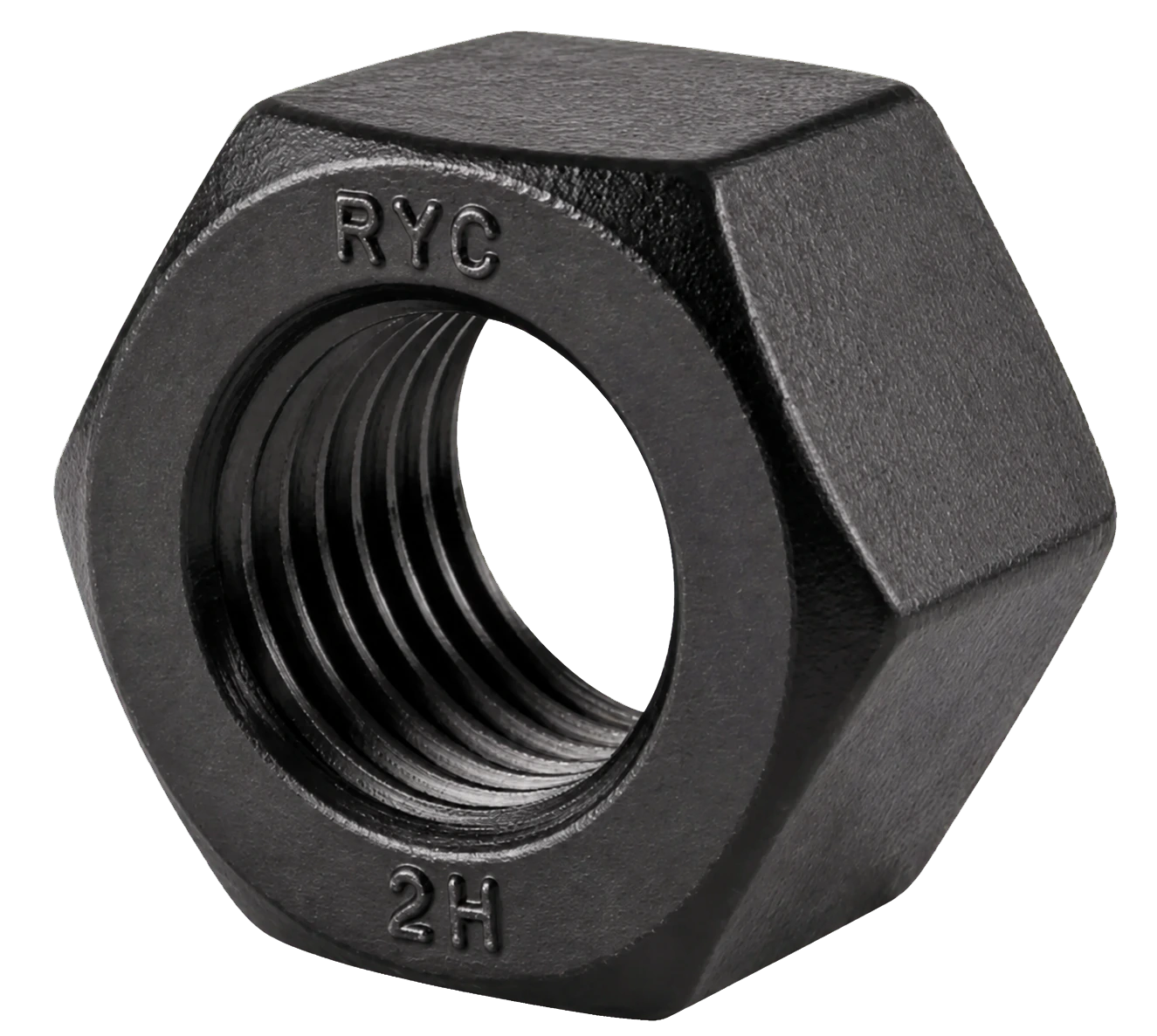
ASTM A194
2H · 4 · 7 · 7L · 8 · 8M
Nuts for industrial service where the assembly specification calls for an ASTM designation.
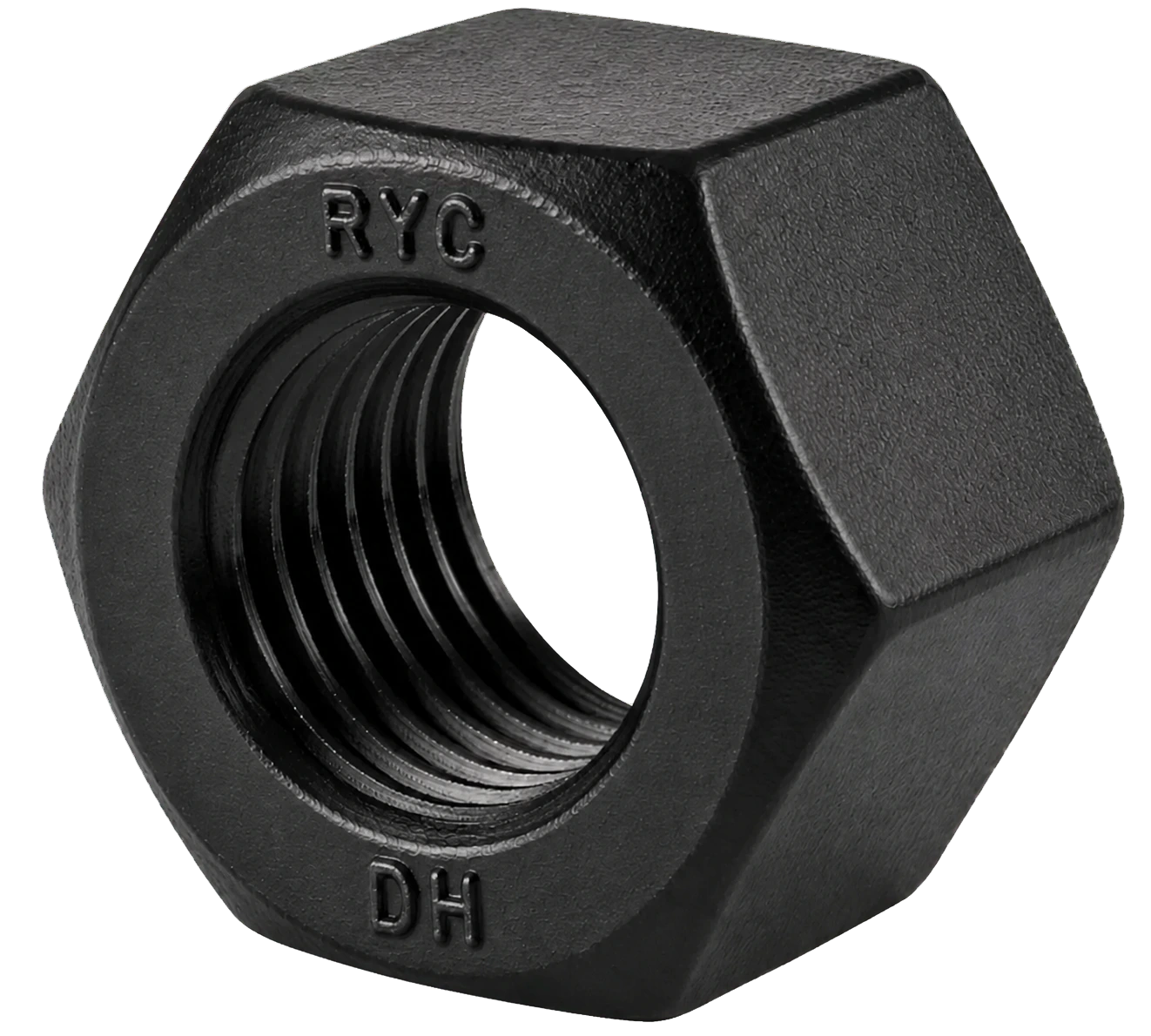
ASTM A563
A · B · C · D · DH · C3 · DH3
Carbon and alloy steel nuts for structural and mechanical applications.
SAE J995
Grades 2 · 5 · 8
Nuts for inch-series bolts, selected according to the grade of the bolt.
ISO 898-2
Metric system
Specifies the mechanical properties of nuts for metric bolts.
ISO 4032:2023
Metric dimensions
Current international standard for the dimensions of metric hexagon nuts.
DIN 934
Historical reference
Formally withdrawn in 2002, although industry may still call for it.
Washers
The washer type must match the bolt, the geometry of the joint and the tension control method.
ASTM F436
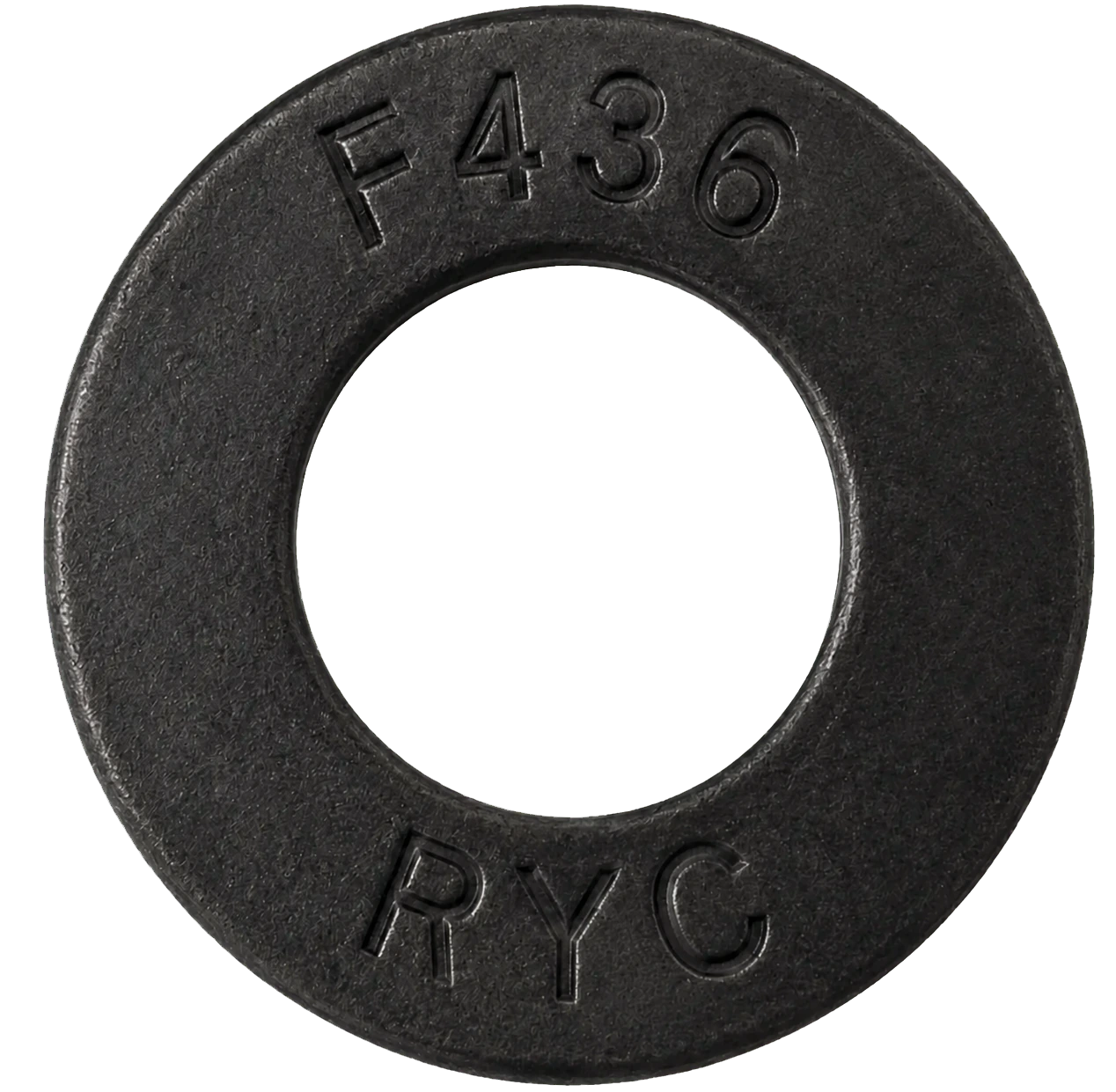
Heat-treated hardened washers, from 1/4″ to 4″ in diameter, for structural and general use.
ASME B18.22.2
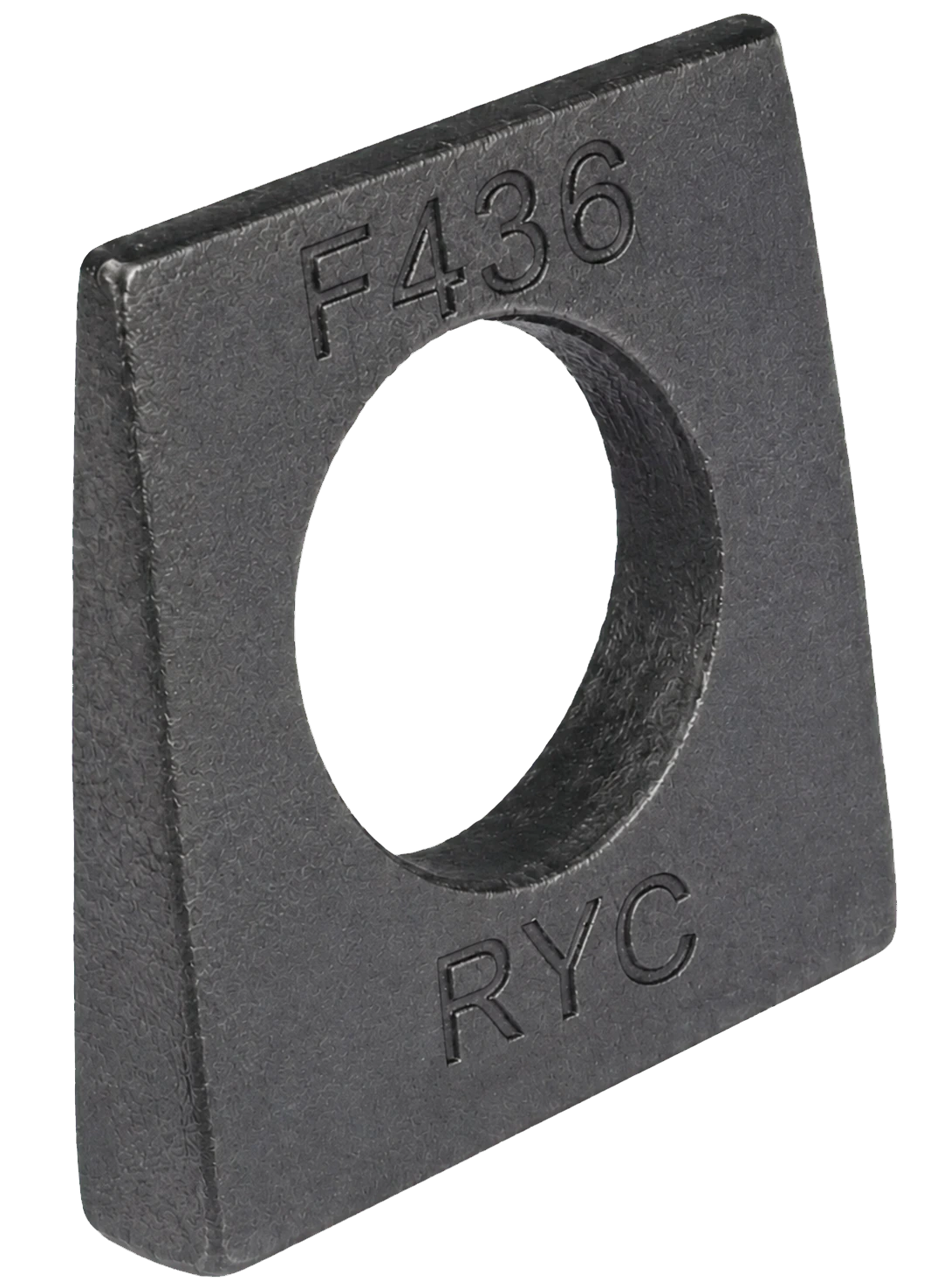
Square bevelled washers that create a proper bearing surface on sloped surfaces, such as the flanges of structural sections.
ASTM F959
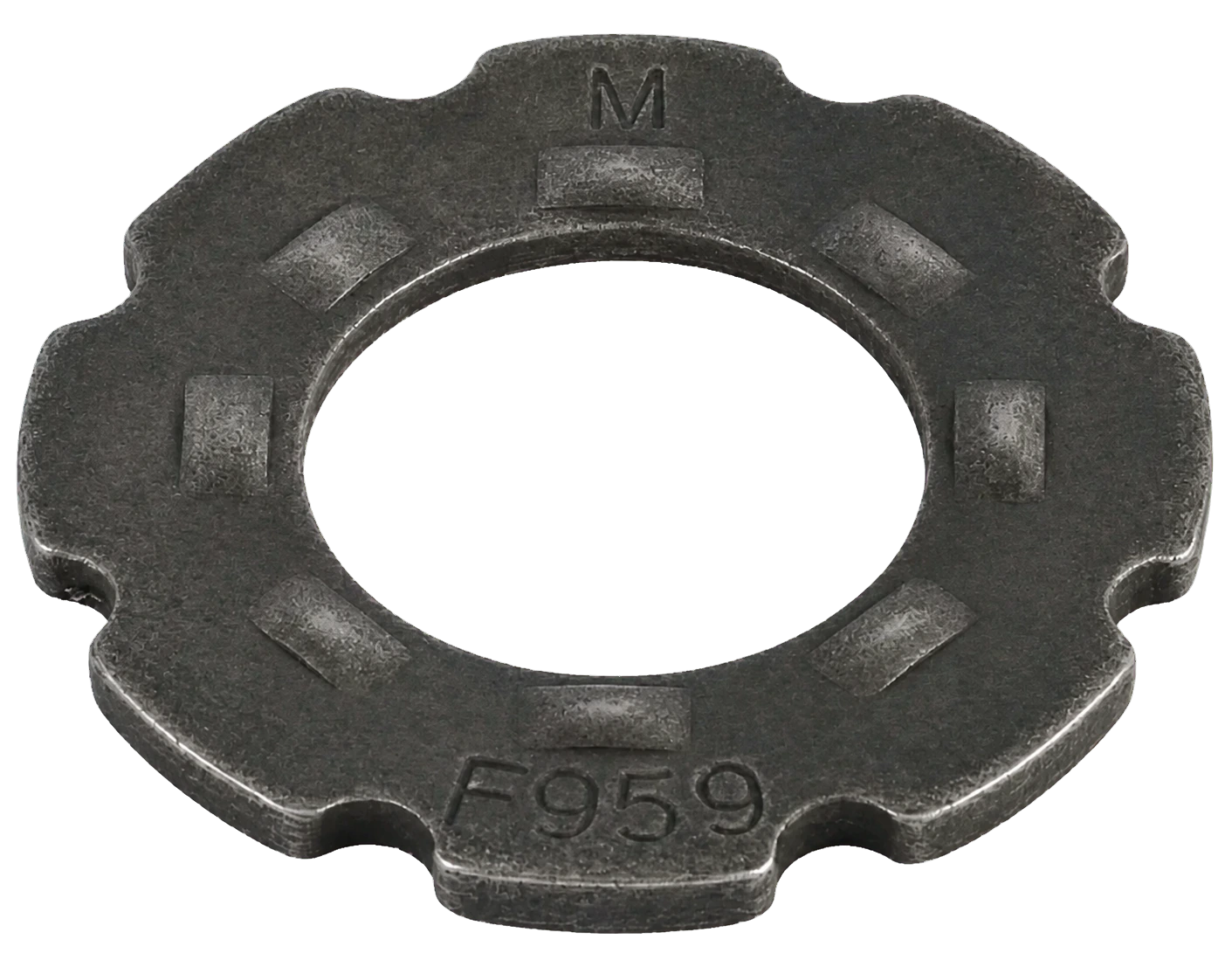
Direct tension indicator washers, from 1/2″ to 1-1/2″, that help guarantee the minimum preload of the bolt.
Preload control
ASTM F959 covers direct tension indicator washers for structural connections.
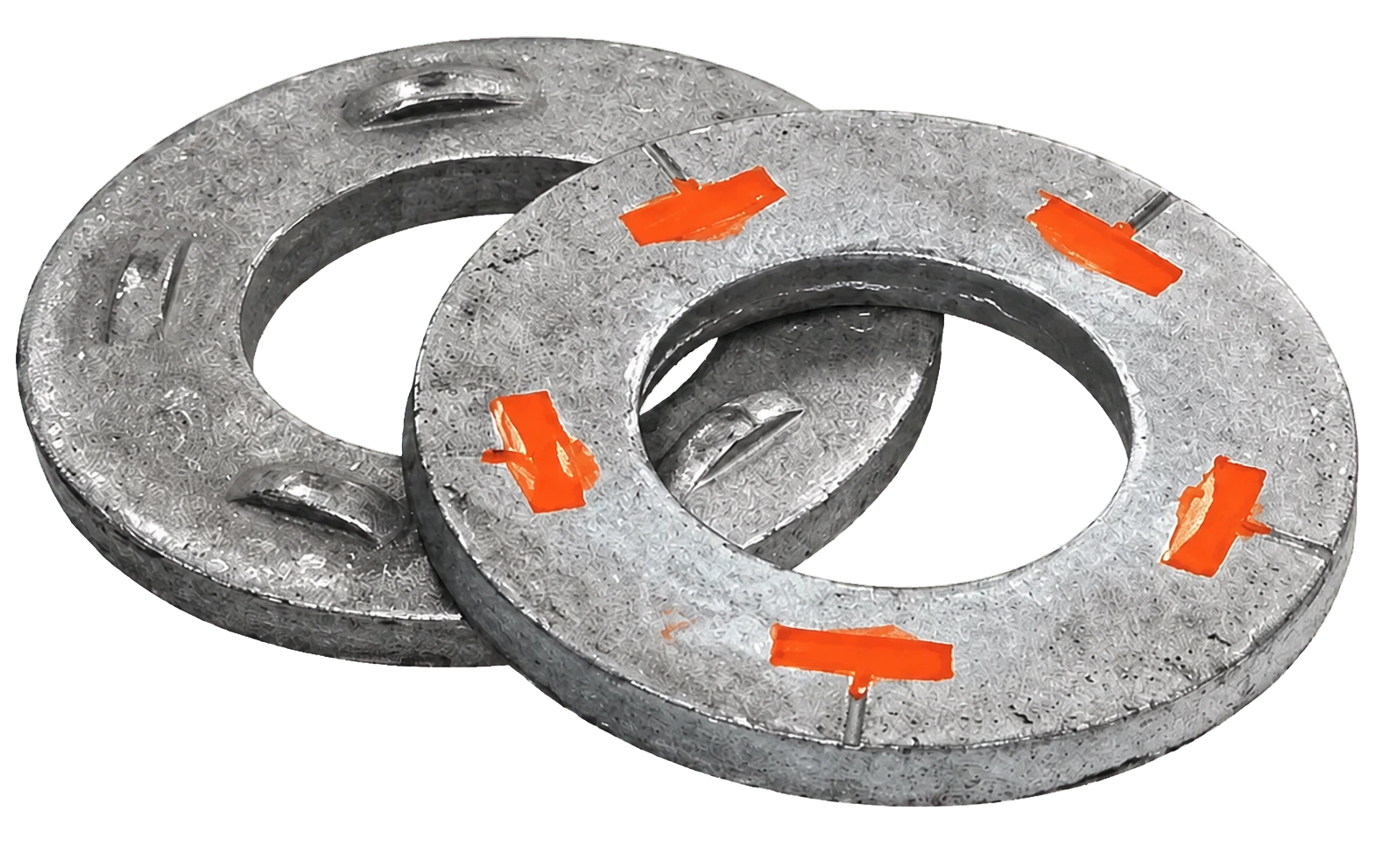
They measure the elongation of the bolt, not only the torque applied.
They allow checking with a feeler gauge or by silicone expulsion (Squirter).
Rust or missing lubrication does not distort the reading the way it distorts torque.
They cut inspection time and the need for costly calibration equipment.
They help avoid joints that are under-tensioned or over-tightened.
Three facts worth confirming before quoting.
Define the standard and grade of the bolt before selecting the nut and washer.
Review the geometry of the joint: a sloped surface may call for bevelled washers.
For critical structural joints, confirm whether the project requires direct tension control.
Technical support
Share the bolt standard and size, joint type, finish, quantity and installation conditions. Our technical team will review the requirement.