ASTM F593
Bolts and screws
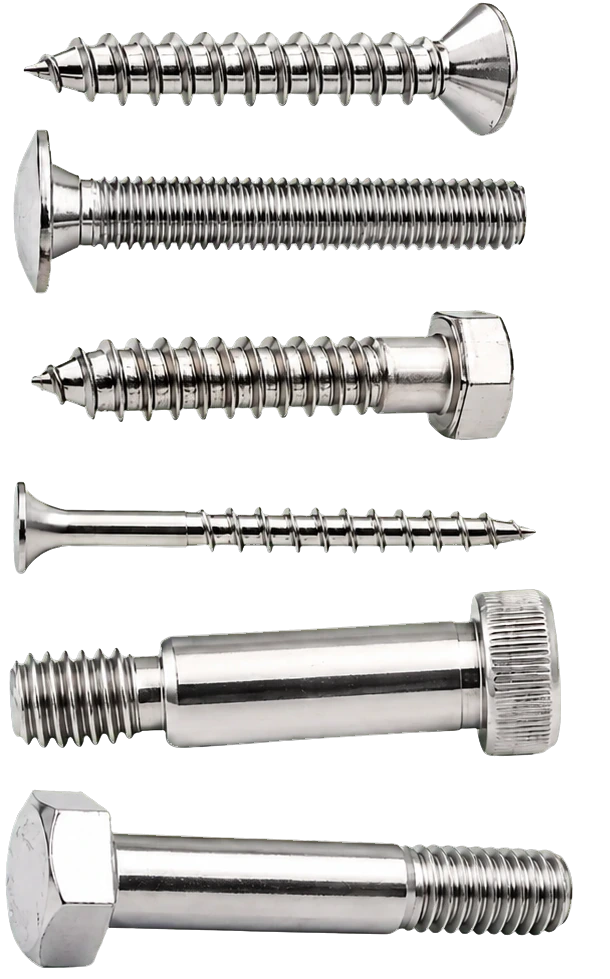
Threaded fasteners in a range of head profiles and lengths.
Supply and manufacturing for industrial applications
ASTM F593 · ASTM F594
An ASTM specification brings together material, strength, manufacturing, testing and marking for a reliable industrial joint.
Typical strength
Up to 150 ksi
Available families
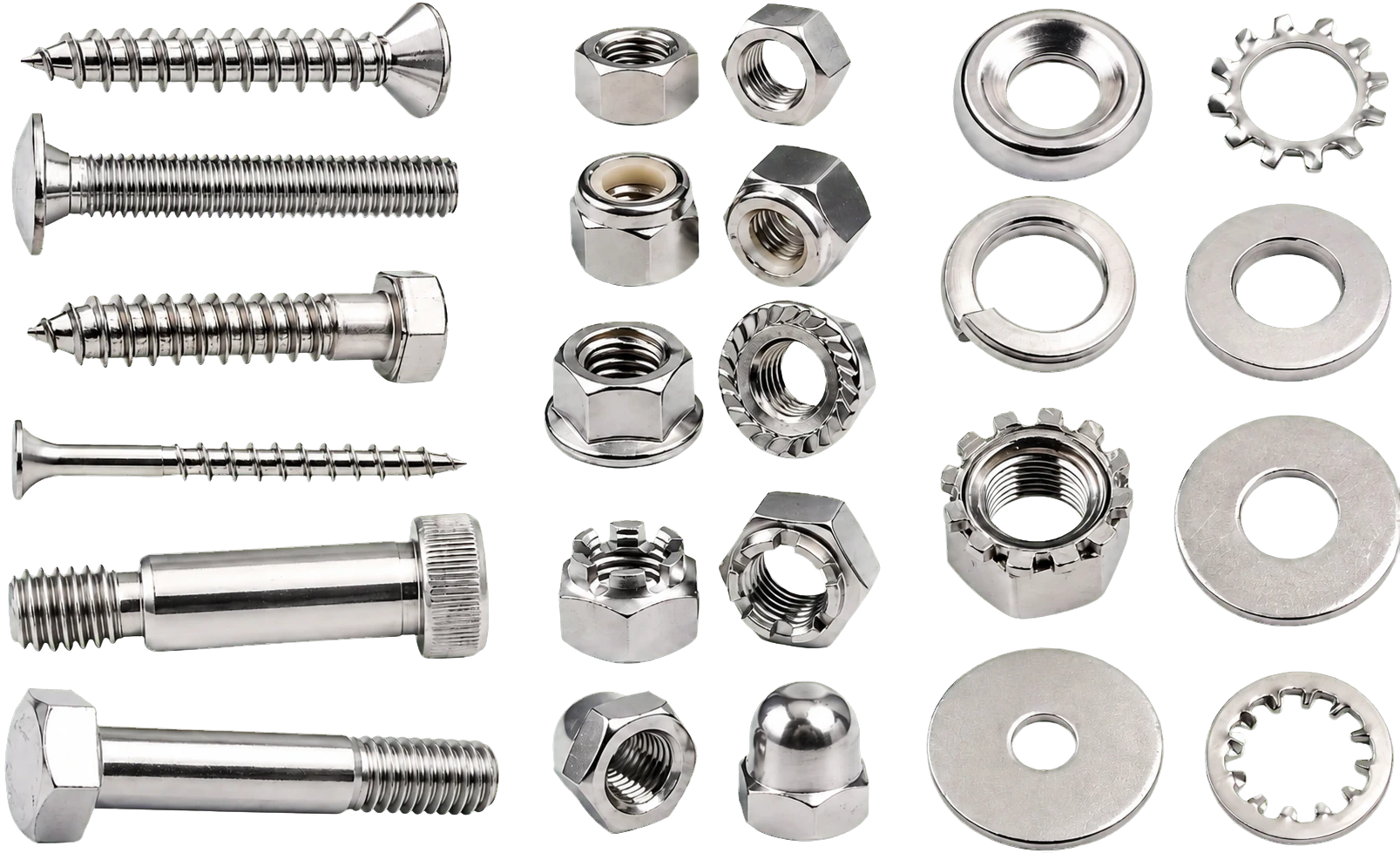
The visual references come from the RYC technical guide. Final geometry, size and standard are confirmed for each requirement.
ASTM F593
Threaded fasteners in a range of head profiles and lengths.
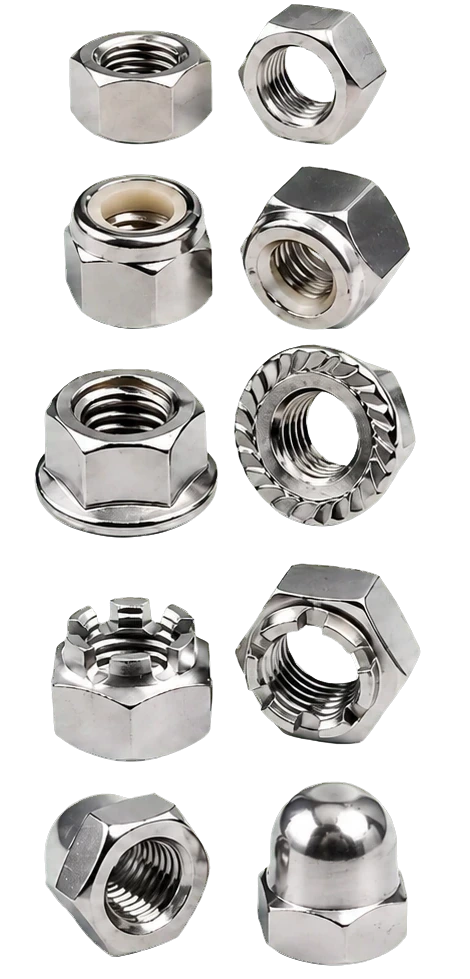
ASTM F594
Matching elements for specified stainless steel assemblies.
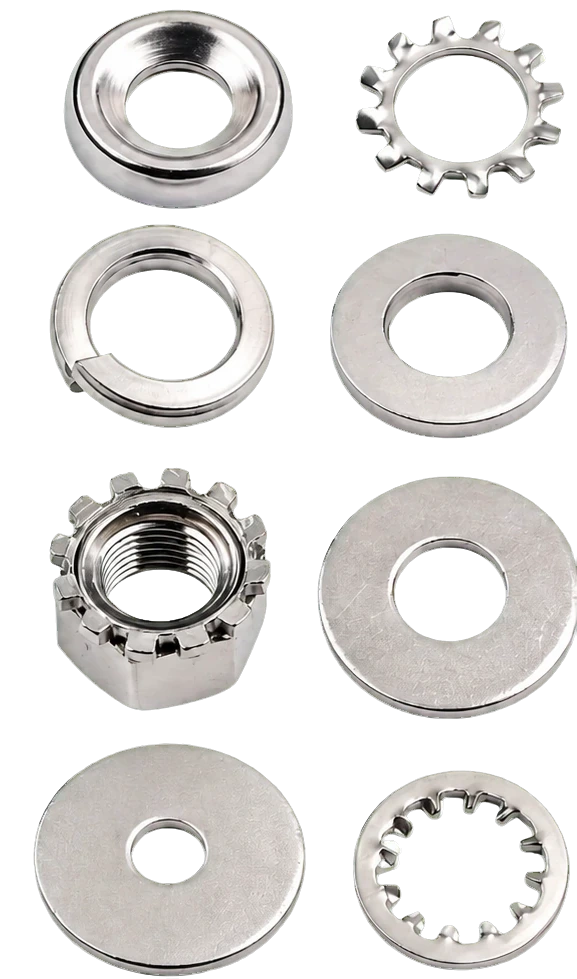
Assembly configuration
Flat, spring and lock washers according to the application.
The full specification
Those designations mainly describe chemical composition and corrosion resistance. ASTM F593 also sets out technical conditions for manufacturing, testing and marking the fastener.
Typical mechanical properties
Values vary with the stainless steel group and the specified manufacturing condition.
| Group / condition | Minimum tensile strength |
|---|---|
| Group 1 · CW | 100 ksi · ≈ 690 MPa |
| Group 1 · SH | 125 ksi · ≈ 860 MPa |
| Group 2 · CW | 100 ksi · ≈ 690 MPa |
| Group 2 · SH | 125 ksi · ≈ 860 MPa |
| Group 3 · HT | Up to 150 ksi · ≈ 1035 MPa |
ASTM F593 classification
The condition describes the process that sets the strength; the group identifies the type of stainless steel.
Condition 01
Cold worked.
Condition 02
Strain hardened.
Condition 03
Heat treated, mainly for martensitic steels.
Condition 04
Annealed.
| Group | Type | Examples |
|---|---|---|
| Group 1 | Austenitic | 304 · 305 · 384 |
| Group 2 | Austenitic | 316 · 316L |
| Group 3 | Martensitic | 410 |
| Group 4 | Ferritic | 430 · specific applications |
Information we need to confirm before defining the fastener.
ASTM F593 defines materials, mechanical properties, manufacturing, testing and marking; “304” or “316” mainly describe composition and corrosion resistance.
The manufacturing condition sets the mechanical strength level of the fastener.
Define the ASTM F594 nut, diameter, thread and dimensional requirements of the joint.
Technical support
Share diameter, thread, group, condition, nut, quantity and service environment. Our technical team will help you review the requirement.